Building a Data-Driven Organization: The Complete Guide to Transforming Culture and Capability in 2024
Building a Data-Driven Organization: The Complete Guide to Transforming Culture and Capability in 2024
In today’s hyper-competitive business field, organizations that harness the power of data don’t just survive—they thrive. Yet, despite the widespread recognition of data’s importance, many companies struggle to become truly data-driven. The challenge isn’t just technological; it’s fundamentally about transforming organizational culture and building sustainable capabilities.
According to recent research by McKinsey, organizations that successfully leverage data are 23 times more likely to acquire customers, 6 times more likely to retain customers, and 19 times more likely to be profitable. However, only 20% of organizations consider themselves truly data-driven. This gap represents both a challenge and an enormous opportunity.
The journey from data-aware to data-driven requires more than just implementing new tools or hiring data scientists. It demands a fundamental shift in how organizations think, operate, and make decisions. In this comprehensive guide, we’ll explore the essential elements of building a data-driven organization, from fostering the right culture to developing critical capabilities.
The Foundation: Understanding What Data-Driven Really Means
Before diving into implementation strategies, it’s crucial to establish what we mean by “data-driven.” A truly data-driven organization doesn’t just collect and analyze data—it systematically uses data insights to inform decision-making at every level, from strategic planning to daily operations.
Data-driven organizations exhibit several key characteristics:
- Decision-making is evidence-based: Decisions are backed by data analysis rather than intuition alone
- Data accessibility is democratized: Relevant stakeholders have access to the data they need when they need it
- Continuous learning is embedded: Organizations continuously test hypotheses and learn from data
- Data quality is prioritized: There’s a systematic approach to ensuring data accuracy and reliability
- Cross-functional collaboration thrives: Teams work together to derive insights and use data-driven solutions
The transformation to becoming data-driven isn’t just about technology—it’s about creating an ecosystem where data flows seamlessly through the organization and empowers every team member to make better decisions.
Building a Data-Driven Culture: The Human Element
Culture is the invisible force that can either accelerate or derail your data-driven transformation. Building a data-driven culture requires intentional effort to change mindsets, behaviors, and organizational norms.
Leadership Commitment and Modeling
Transformation starts at the top. Leaders must not only champion data-driven decision-making but actively model it. When executives consistently ask for data to support recommendations, reference analytics in strategic discussions, and share data-driven success stories, they signal to the organization that data is valued.
Consider how Netflix’s leadership team uses data. Reed Hastings and his executives regularly reference viewing data, engagement metrics, and A/B testing results in public communications, demonstrating their commitment to data-driven decision-making throughout the organization.
Overcoming Data Resistance
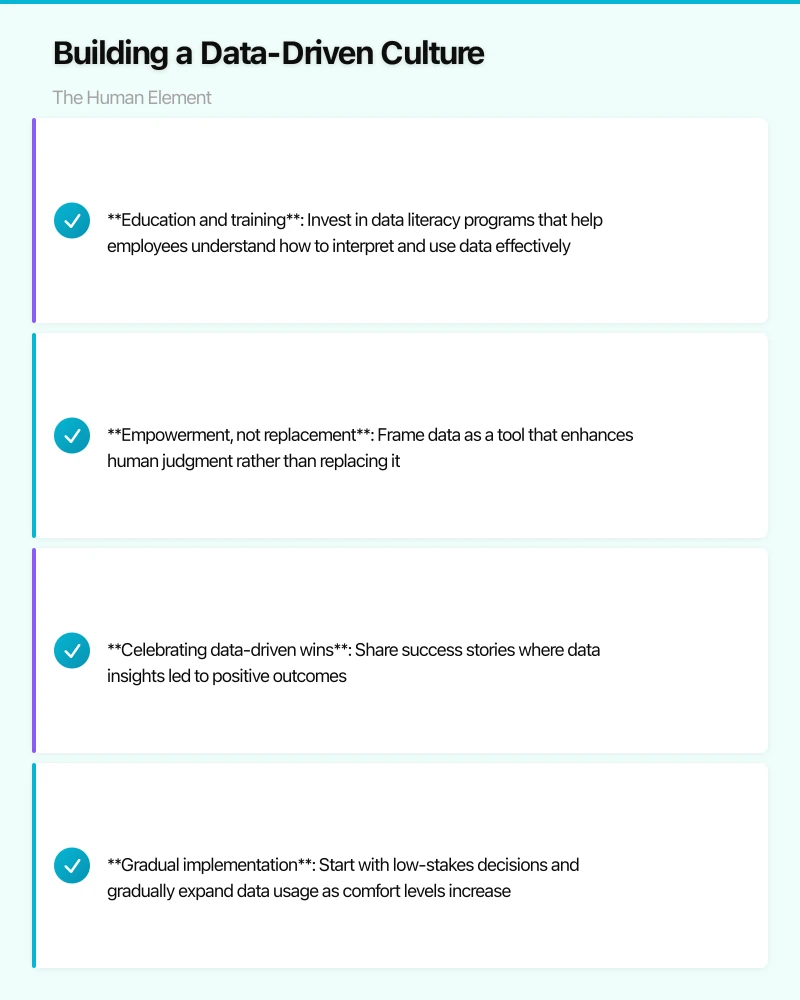
Resistance to data-driven approaches often stems from fear—fear of being replaced by algorithms, fear of losing autonomy, or fear of being held accountable to numbers. Address these concerns through:
- Education and training: Invest in data literacy programs that help employees understand how to interpret and use data effectively
- Empowerment, not replacement: Frame data as a tool that enhances human judgment rather than replacing it
- Celebrating data-driven wins: Share success stories where data insights led to positive outcomes
- Gradual implementation: Start with low-stakes decisions and gradually expand data usage as comfort levels increase
Creating Psychological Safety
A data-driven culture requires psychological safety—the belief that team members can share observations, ask questions, and even admit mistakes without fear of punishment. When people feel safe to share what the data reveals, even when it contradicts expectations or reveals problems, organizations can respond more quickly and effectively to challenges.
Developing Essential Data Capabilities
While culture provides the foundation, organizations need concrete capabilities to execute on their data-driven ambitions. These capabilities span technology, processes, and human skills.
Technical Infrastructure
Modern data infrastructure should support the entire data lifecycle—from collection and storage to analysis and visualization. Key components include:
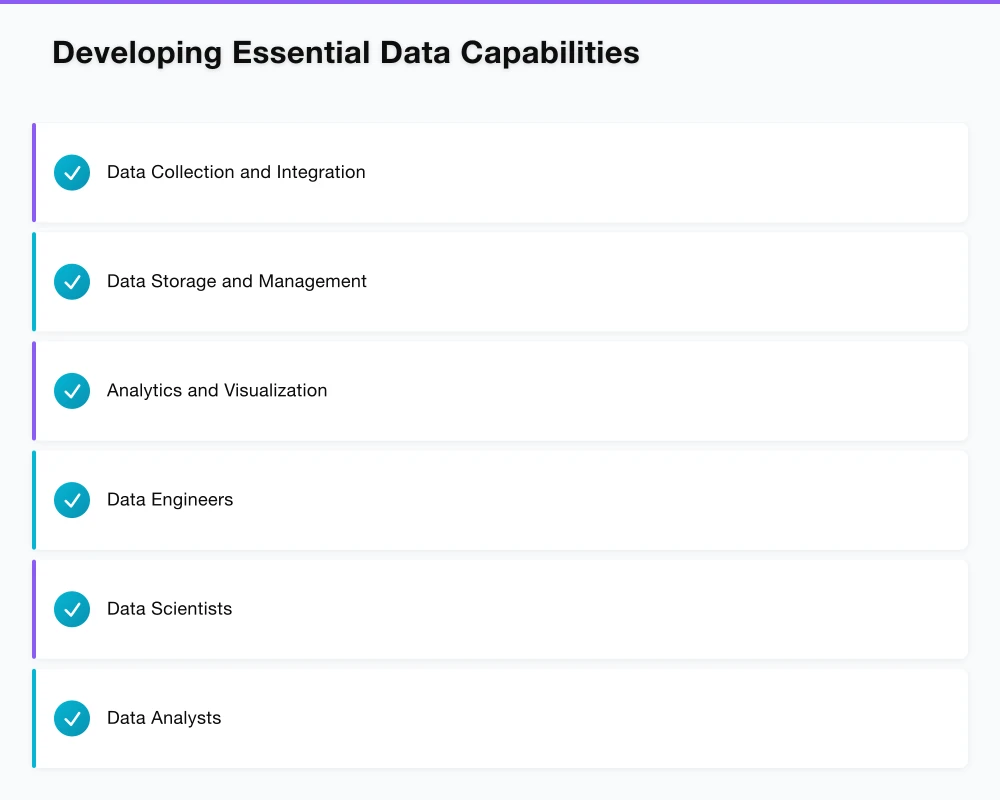
Data Collection and Integration: Use systems that can capture data from multiple sources—customer interactions, operational processes, external APIs, and IoT devices. Tools like Apache Kafka for real-time data streaming or cloud-based ETL services can help create a unified data pipeline.
Data Storage and Management: Choose storage solutions that balance cost, performance, and scalability. Cloud data warehouses like Snowflake or Google BigQuery offer flexibility and powerful analytics capabilities, while data lakes can handle unstructured data for future analysis.
Analytics and Visualization: Invest in tools that make data accessible to non-technical users. Platforms like Tableau, Power BI, or modern solutions like Looker can help democratize data access while maintaining governance standards.
Data Governance Framework
With great data comes great responsibility. Establish clear governance frameworks that address:
- Data quality standards: Define what constitutes reliable data and use monitoring systems
- Privacy and security protocols: Ensure compliance with regulations like GDPR while enabling analytics
- Access controls: Determine who can access what data and under what circumstances
- Data lineage tracking: Maintain clear records of where data comes from and how it’s transformed
Building Data Teams
Successful data organizations require diverse skill sets working in harmony:
Data Engineers: Focus on building and maintaining data infrastructure, ensuring reliable data pipelines, and optimizing system performance.
Data Scientists: Apply statistical methods and machine learning techniques to extract insights and build predictive models.
Data Analysts: Translate business questions into analytical investigations and communicate findings to stakeholders.
Business Intelligence Developers: Create dashboards and reports that make data accessible to business users.
The key is creating teams where these roles complement each other and collaborate effectively with business stakeholders.
Overcoming Common Implementation Challenges
Every organization encounters obstacles on their data-driven journey. Understanding common challenges and proven solutions can help you navigate these hurdles more effectively.
Data Silos and Integration Issues
One of the most persistent challenges is breaking down data silos—isolated pockets of data that can’t easily communicate with each other. Legacy systems, departmental boundaries, and technical constraints often create these silos.
Solution Approach: Start with a comprehensive data audit to map existing data sources. Prioritize integration efforts based on business value, beginning with the most critical cross-functional use cases. Consider implementing a data mesh architecture for large organizations, where domain teams own their data while adhering to common standards.
Skill Gaps and Training Needs
Many organizations struggle with a shortage of data skills, both technical and analytical. This challenge is exacerbated by high demand for data professionals in the job market.
Solution Approach: Develop a multi-pronged strategy that includes hiring external talent, upskilling existing employees, and partnering with external providers for specialized needs. Create clear learning paths that help employees develop data literacy appropriate to their roles.
Ensuring Data Quality and Trust
Poor data quality can quickly undermine confidence in data-driven initiatives. Common issues include duplicate records, inconsistent formats, missing values, and outdated information.
Solution Approach: Use data quality monitoring systems that can automatically detect and flag potential issues. Establish clear data stewardship roles and responsibilities. Create feedback loops that allow users to report data quality issues and track resolution.
Measuring ROI and Demonstrating Value
Stakeholders often struggle to quantify the return on investment from data initiatives, particularly in the early stages when infrastructure development requires significant upfront investment.
Solution Approach: Define clear success metrics at the outset of data initiatives. Focus on business outcomes rather than technical metrics. Start with pilot projects that can demonstrate quick wins while building toward longer-term capabilities.
Strategic Implementation: A Roadmap for Success
Transforming into a data-driven organization requires a thoughtful, phased approach that balances quick wins with long-term capability building.
Phase 1: Foundation Building (Months 1-6)
Begin with assessment and planning:
- Conduct a comprehensive data maturity assessment
- Identify key business use cases and prioritize based on impact and feasibility
- Establish data governance policies and begin cultural transformation initiatives
- Start with foundational infrastructure improvements
- Launch data literacy training programs
Phase 2: Capability Development (Months 6-18)
Focus on building core capabilities:
- Use integrated data platforms and analytics tools
- Develop cross-functional data teams
- Execute pilot projects in priority business areas
- Refine data governance processes based on early learnings
- Expand training programs and celebrate early successes
Phase 3: Scale and Optimization (Months 18+)
Drive organization-wide adoption:
- Scale successful pilots across the organization
- Use advanced analytics and machine learning capabilities
- Optimize data operations for efficiency and cost-effectiveness
- Develop predictive and prescriptive analytics capabilities
- Create self-service analytics capabilities for business users
Key Success Factors
Throughout this journey, several factors can significantly impact success:
Executive Sponsorship: Ensure sustained leadership support and adequate resource allocation.
Change Management: Invest in comprehensive change management to address cultural and process changes.
Iterative Approach: Use agile methodologies to iterate quickly and learn from early implementations.
Business Alignment: Keep business value at the center of all data initiatives.
Continuous Learning: Stay current with emerging technologies and best practices in the rapidly evolving data field.
Conclusion: The Future is Data-Driven
Building a data-driven organization is not a destination but a continuous journey of transformation. Organizations that successfully make this transition don’t just improve their decision-making—they fundamentally change how they compete and create value.
The key takeaways for your data-driven transformation journey:
-
Culture comes first: Technology alone cannot create a data-driven organization. Invest in changing mindsets and behaviors alongside technical capabilities.
-
Start with business value: Always connect data initiatives to clear business outcomes. This ensures sustained investment and organizational support.
-
Build for the long term: While quick wins are important, focus on building sustainable capabilities that can evolve with your organization’s needs.
-
Embrace continuous learning: The data field is rapidly evolving. Organizations that stay curious and adaptable will have sustained competitive advantages.
-
Invest in your people: Your employees are the bridge between data and business value. Invest in their skills and empower them to make data-driven decisions.
As we move further into the age of AI and machine learning, the organizations that have built strong data-driven foundations will be best positioned to leverage these emerging technologies. The time to start your transformation is now—not because it’s easy, but because the competitive advantages for those who succeed will be substantial and lasting.
The future belongs to organizations that can turn data into insights, insights into decisions, and decisions into competitive advantage. Your journey toward becoming a truly data-driven organization starts with the next decision you make. Make it a data-informed one.
Your digital strategy starts with being found online. Cosmos Web Tech covers SEO, WordPress, and web performance for Australian businesses.
I lead Ganda Tech Services, where we turn digital strategy into results through specialist cloud, web design, and mobile app teams across Sydney.
About the Author
Ashish Ganda is the founder of Ganda Tech Services, a Sydney-based technology consultancy specialising in cloud infrastructure, web development, and mobile app solutions for Australian businesses.
Digital Transformation Roadmap 2026
A 12-month framework for Australian SMBs ready to modernise — phases, tools, and milestones.